The government of Javier Milei's trade opening strategy, presented as a central component of the anti-inflation plan, began to exhibit an increasingly visible dual effect on the real economy. At the same time, the industry, accustomed to no competition, became more exposed to imported goods, showing setbacks in production, capacity utilization, and formal employment, configuring a tension that reinstates the debate between disinflation from external supply and sustaining the local manufacturing fabric.
In 2025, the increase in foreign purchases consolidated as a structural signal of the new scheme. In its approach, tradable and labor-intensive sectors require predictability and "fair" competition rules, with a focus on financing for SMEs, reduction of non-salary costs, and reinforcement of controls against practices such as import under-invoicing, in a global context of oversupply.
The dilemma for 2026 is clear: the import opening helped moderate prices in durable goods and accelerate disinflation in tradable sectors, but it coincided with a loss of production and employment in the most exposed sectors.
The big question is whether growth in more dynamic segments—energy, agribusiness, and knowledge-based services—will be enough to compensate for the manufacturing contraction or if the tension between cheaper goods and the deterioration of industrial employment will continue to mark the country's economic direction.
In the automotive sector, the movement was different: the reduction in real prices was more limited, but it was combined with a change in the composition of the offer, with a market increasingly supplied by imported units.
In the automotive sector, this divergence became evident towards the end of 2025. In contrast, some activities linked to agriculture, IT, and food showed expansion, reinforcing an economy that is reconfiguring with clear winners and losers concentrated in traditional manufacturing.
The Argentine Industrial Union (UIA) explicitly expressed its concern at the beginning of 2026. However, sectoral data shows that the impact was asymmetric and that labor-intensive industrial branches came under pressure.
The dynamics were clearly reflected in the real prices of mass-market products. Although in the accumulated 2025 manufacturing production grew compared to 2024—a year traversed by a collapse in activity—the annual closing again showed negative signals, with a year-on-year decline in December.
The company announced the definitive closure of its plant in Pilar, inaugurated in 2022 after an estimated investment of US$ 50 million, and disconnected about 220 workers to migrate to a scheme based on importing finished goods.
In the private sector, the balance approached a loss of around 200,000 jobs in the observed period, with construction being the most affected sector and significant falls in textiles, clothing, leather and footwear; metal-mechanics; automobiles and tires; and chemistry and petrochemistry.
The case was read as a preview of what could happen in other white line segments if the differential in competitiveness between imported products and local manufacturing is maintained, especially when the jump in imports far exceeds the expansion of demand.
General indicators also confirmed the industrial cooling. In the comparison between 2025 and 2023, the case of washing machines and refrigerators was emblematic, with significant drops in real prices, while in notebooks and tires, marked declines were also observed.
Consultants comparing the current level with the period before the change of administration pointed out that the industry remains several points below the records of late 2023, with deep falls in textiles, automobiles, metallurgy, and non-metallic minerals, among other sectors.
The pattern repeats when zooming in by branches. Data from the social security and labor systems showed setbacks concentrated in industrial branches and sectors linked to domestic demand.
In many cases, the productive fall coincided with an increase in external purchases and a loss of local production share against imported goods, a fact that reinforces the idea of displacement in domestic supply.
The blow also transferred to registered employment. In contrast, local production retreated and the use of installed capacity was at depressed levels, below 50% towards the end of the year.
The entity warned that activity did not recover previous levels and that industrial employment accumulated a fall of more than 60,000 jobs since its last peak.
From the officialism, they maintain that the process allowed "normalizing relative prices" after years of distortions and that the recovery will tend to lean on sectors with greater productivity and competitiveness.
On the price front, greater external competition pushed down the value of tradable goods and moderated sensitive consumption sectors, especially durable goods. While sales grew strongly, supply shifted to imported models, with a pronounced increase in these units in the domestic market.
Regarding the universe of goods-producing sectors that compete with imports, a majority recorded contractions between the third quarter of 2023 and the same period of 2025.
Private measurements and foreign trade records show very pronounced import jumps in specific sectors, in parallel with strong real price falls.
With the elimination or flexibilization of barriers, the import flow accelerated, with a strong incidence in consumption and capital goods. Also, falls appeared in transport and services to companies.
For manufacturers and autopart suppliers, the scenario consolidated the diagnosis of "price competition" without a clear transition bridge to production, in a context where systemic costs and financing remain decisive.
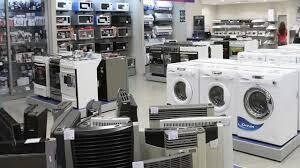
The retreat of Whirlpool ended up confirming the change of era in home appliances. The plant had the capacity to produce 300,000 washing machines per year.
Buenos Aires - February 17, 2026 - Total News Agency - TNA - The trade opening strategy of the Government of Javier Milei, presented as a central component of the anti-inflation plan, began to exhibit a more and more visible dual effect on the real economy.